


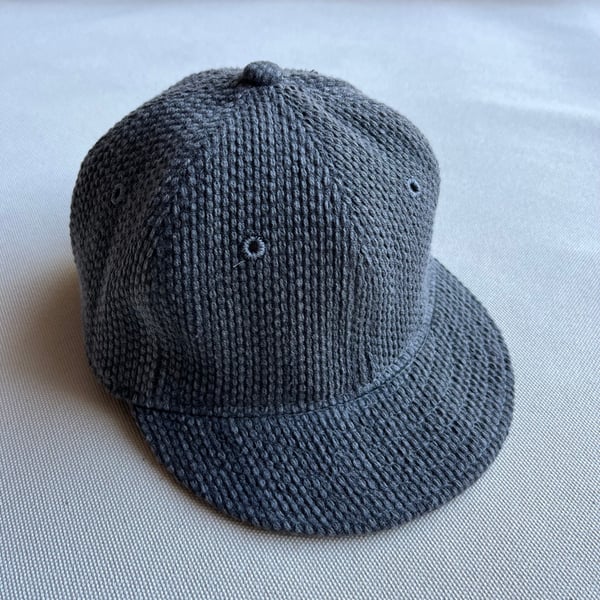


Early 1900's Boro Indigo Ball Cap 001
$240.00
Sold Out
*PLEASE NOTE* This fabric is early 20th century and should be treated with care. This fabric has been natural Indigo dyed and therefore may bleed when washed. There may be colour inconsistencies, repairs and fading on the fabric and these are to be celebrated. Please keep this in mind before purchasing.
This is my interpretation of an early 1900's ball cap.
For this particular cap I've used an original pattern from the era which features an unstructured 6 panel crown, a cotton twill sweatband, Singer 32-43 oversized stitched eyelets using indigo dyed thread, and an unbreakable soft 2" inch stitched visor consistent with caps from the era.
This fabric was originally a futon cover and has original absolutely beautiful sashiko work throughout. I have done my absolute best to showcase this work in each cap that I have made. The fabric is very old and rare, and this is reflected in the price of each cap.
This particular pattern was prominent in the early 1900's (pre-1930's) and although not an exact reproduction, I feel these caps are the closest that you will find to the originals of the time in regard to fit. All constructed using period correct machinery and processes.
Features:
- Early 20th century Japanese Indigo dyed cotton
- Singer 32-43 oversized stitched eyelets using indigo dyed thread
- Black cotton twill sweatband
- Indigo cotton D-ring adjustable strap
- Canvas lined 2" inch unbreakable stitched brim
All of my caps are handmade from start to finish by me, using machines from the 1920's-1960's. No two caps are the same and differences in construction are to be celebrated.
